
Engineering Secrets Caster Wheel Manufacturers Use to Boost Load Capacity
One of the most important caster wheel performance factors is the load capacity. A caster wheel manufacturer should be able to support weight, shock, vibration and constant motion, no matter the location, it could be a factory, warehouse, hospital, automotive plants, or heavy material handling systems—it should not fail.
Leading caster wheel manufacturers adopt high engineering standards, high material quality, and high precision in manufacturing technology in order to maximise the load carrying capacity. This blog will disclose the engineering secrets of how the best quality caster wheel is developed to carry heavy loads without compromising on the safety and smooth movement.
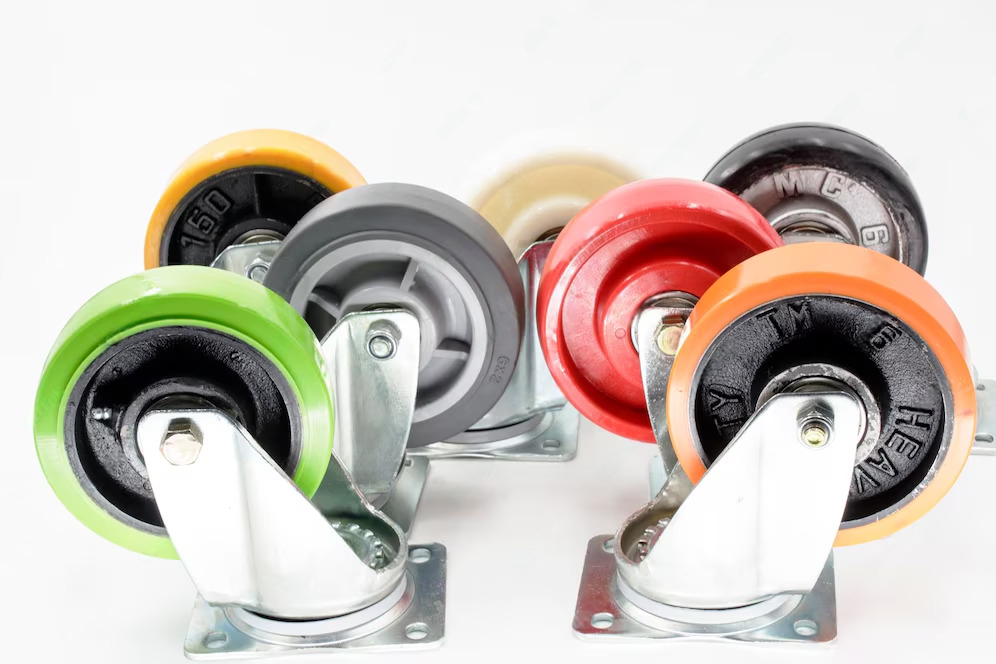
1. Raw Materials used in the high-strength Wheel and Bracket
a) Materials on Wheels, which increase Load Capacity
- Nylon -Very high bearing capacity, minor rolling resistance.
- Polyurethane (PU) - Strong + shock absorbent + floor protection.
- Rubber -Medium load capacity and high cushioning.
- Cast Iron / Forged Steel -Very heavy-duty load handling.
- Fibre-reinforced polymers - high level of durability and chemical resistance.
The right material is used to make sure that the caster wheel will be able to withstand the stress without deforming.
b) Heavy Duty Bracket Construction
- Thick steel plates
- Precision-welded joints
- Double ball raceways
- Reinforced fork structures
- CNC-formed metal brackets
This will avoid high load bending and provide stability.
2. Why Caster Wheel Manufacturers Focus on Diameter & Width
Increased Diameter = Increased Load Capacity
The bigger the wheel diameter, the greater the load or weight that it can carry and roll easily.
Manufacturers design
- 3–4 inch wheels for light duty
- 6–8 inch wheels for medium duty
- 10–12-inch wheels for heavy-duty
- Reinforced fork structures
- CNC-formed metal brackets
Broad Wheels = Carry More Weight
They are also designed with dual-wheel casters
- Very high load
- Rough flooring
- High shock environments
3. Smooth Movement with a High Load Precision Bearings
- Roller Bearings - Ideal where there are large loads.
- Ball Bearings - Smooth movement, medium-high load.
- Tapered Roller Bearings - high load + perfect alignment.
- Thrust Bearings- These are applied to heavy swivel casters.
Good bearings minimise friction; therefore, the caster moves more weight using less energy.
4. Hardening Technology and Heat Treatment
- Heat treatment
- Tempering
- Case hardening
These processes increase tensile strength, Impact resistance, and Fatigue life, especially in forged steel or cast iron wheels.
5. Caster wheel manufacturers used the Swivel Design at a high level
- Double ball raceways
- Thicker top plates
- Kingpin-less swivels (when the load is heavy)
- Accurate CNC-machined parts.
Kingpin-less casters are evenly spread and without weak points; they enhance performance.
6. Bolstered Mounting Plates and Forks
- Extra-thick mounting plates
- Rib-reinforced forks
- Extended side brackets
Such reinforcements spread the load and avoid structural collapse. In heavy-duty casters, the mounting plate occasionally bears 50-70% of the load and therefore it is necessary to reinforce it.
7. Surface Treatments/High-Performance Coatings
Casters are exposed to friction, chemicals and physical stress. In order to sustain the load capacity as time goes the manufacturers resort to treating them with:
- Zinc plating
- Powder coating
- Chrome coating
- Black oxide finishing
- Anti-corrosion coatings
Such a coating averts rust, lowers wear, and guards the metal, called load preservation engineering.
8. Maximised Wheel Tread Profiles
Friction and load distribution are dependent on the tread design.
The manufacturers employ the following profiles of treads:
- Flat tread (good with heavy loads)
- Round tread (friction is reduced and turning is enhanced)
- Crown tread (high speed movement)
Multi-layer bonding technology is frequently applied to manufacture PU and rubber treads in order to resist shock and heavy impact.
9. Load Testing and Quality Testing in the Industry
Prior to the approval of production, manufacturers conduct:
- Static load testing
- Dynamic rolling load tests
- Impact load tests
- Abrasion resistance tests
- Salt spray corrosion tests
- Swivel fatigue cycle tests
Only the wheels that can pass these tests will be qualified as high load capacity products. That is why the presence of professional manufacturers is superior to that of affordable local ones.
10. Tailor-Made Special Environment Engineering
The load capacity is different in different environments.
Manufacturers streamline caster wheels depending on:
- High-Temperature Areas - Use phenolic resin, heat-resistant rubber or forged steel wheels.
- Cold Storage / Freezers - Applicant nylon or PU, which remains flexible in low temperatures.
- Chemical-Exposed Industries - Brackets and wheels should be made of stainless steel and should not be susceptible to chemicals.
- Heavy Shock Environments - Twin wheels, spring-loaded casters or steel.
The development of greater load capacity is not an easy undertaking, and it involves the use of hi-tech materials, accurate engineering, tough construction, and extensive testing. All these engineering secrets are applied by the top caster wheel manufacturers to produce safe, long-lasting, and workable wheels able to withstand the heavy workload of industries.
Knowledge of these techniques enables buyers to select an appropriate caster wheel-and manufacturers to display their experience in engineering.